Stretch VII. Rules and people
Hiring someone and checking them
How do you hire and check someone for water work?
Chapter 34 of 34. Sources checked .
Work out which license the job needs, then look up that person with the agency that issues it. Plumbers are with TSBPE, well drillers and pump installers with TDLR, and septic, irrigation, backflow and water treatment people with TCEQ. Get the number before any work starts, and check it yourself.
34-1 Which license for which job
The last chapters have mentioned a good many trades. Here they are together. Water work in Texas falls under several agencies, so one card does not cover it all, and asking "are you licensed?" is only half a question. The better one is "licensed by whom, for what, and what is the number?"
| Job | License or registration | Where to check |
|---|---|---|
| Plumbing, including gas piping | TSBPE plumbing license | TSBPE "Find a License/Registration"1 |
| Drilling a well, installing a well pump | TDLR driller or pump installer license | TDLR license search2 |
| Septic: installing, repairing, servicing for pay | TCEQ license or registration | TCEQ licensed OSSF professional search3 |
| Septic site evaluation | TCEQ site evaluator, or a professional engineer | TCEQ search; the engineers' board4 |
| Pumping and hauling septic sludge | TCEQ registration | Ask TCEQ5 |
| Lawn irrigation | TCEQ irrigator license | TCEQ licensing6 |
| Testing backflow assemblies | TCEQ backflow prevention assembly tester | TCEQ licensing7 |
| Water treatment under contract | TCEQ water treatment specialist, or a plumber | TCEQ licensing8 |
| LP gas systems | LP gas installer, under the Railroad Commission | Ask the Railroad Commission; see Chapter 33 |
Two rows have loose ends. TCEQ's page on water treatment says "Private wells that do not meet the definition of public water system" are outside that chapter's requirements, while the statute speaks of "public or private water systems." This book could not settle that, so ask.89 And no page was found that says who exactly must hold a backflow tester's license, beyond the rule that assemblies "shall be tested upon installation by a licensed backflow prevention assembly tester."10
34-2 Checking a plumber
TSBPE's lookup can search by name, name and license type, license number, city or county.1 Use the number. Names repeat. The consumer sheet says "Licensed or Registered plumbers in Texas are required to carry their license cards with them while on a job site," and the statute says holders "shall carry the license or registration on his or her person while engaged in plumbing."1112 So ask to see the card, and match it to the lookup. A license is "valid throughout this state," so a plumber from elsewhere in Texas may work here.12
Scale matters too. The sheet describes one level as "Limited to residential repairs and installations" and one that "Must work under a Master Plumber's supervision." Ask who the responsible master plumber is on anything larger than a repair. In cities that issue permits, the plumber's insurance is checked at "not less than $300,000 for all claims arising in a one-year period."12 Out of town, ask to see a certificate, because nobody else may be asking.
A firm's web page tells you what it says it does and little more. Here is a service page from a Pennsylvania company (Central Plumbing & HVAC, run by the same team as this book), as an example of how such a page is laid out: a list of jobs, a list of counties, and the word licensed. That company does not work in Texas, and this is an example, not a recommendation. Whichever firm you are reading about, the page is where you get the name and number to look up. The lookup is where you find out.
34-3 Checking well and septic people
Well drillers must mark their license number on their rigs, and TDLR's search is at its own site.213 Look before the rig arrives. Chapter 6 has the rest. On septic work, TCEQ keeps both a license search and a list of court judgments against OSSF professionals.3 Remember that "A maintenance provider is an individual person," so a contract should name one.14
TCEQ's advice on hiring a septic installer travels well to other big jobs. "Obtain at least three estimates." "Do not pay large sums of money in advance."15 TCEQ adds that Texas Property Code 162.006 "requires a construction trust account to be established for any amount over $5,000 when a contractor enters into a written contract with an owner." If you are spending that kind of money, it may be worth asking a lawyer how that applies to you.
Irrigators have a rule worth knowing: "it's against the law to conduct or advertise landscape irrigation services without a Texas landscape irrigator's license," and their materials "must display a valid landscape irrigator's license number."16
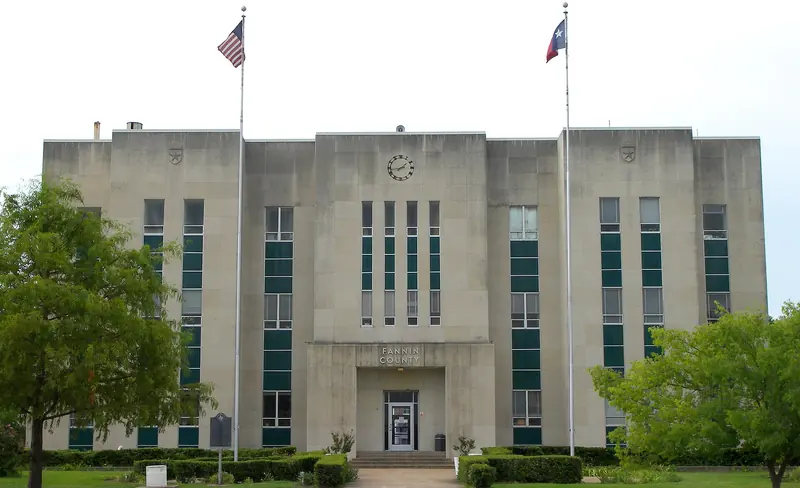
Figure 34-1 and Figure 34-2 show Clarksville and Bonham, two of the towns this book's readers may hire from. The state's lookups work the same for a firm from either town as for one from Dallas.

34-4 If it goes wrong
Start with the person, in writing, with dates. Then go to the agency that issued the license. TSBPE posts a general complaint form.17 The board "may investigate an alleged violation of this chapter by a person who: (1) is licensed under this chapter; (2) is the owner of a plumbing company subject to this chapter; or (3) performs plumbing without holding a license under this chapter." It must tell the parties how the complaint stands "at least quarterly."12
It may hold off where the parties are in a lawsuit, "if the board determines the complaint process is being abused," unless health or safety is at risk.12 Disciplinary information is public, but "may not include the name of the person who filed the complaint."12 So what a board finds can become public, without your name on it. TCEQ has its own complaint page for septic work.3
Who decides this
- Is this plumber licensed?
- TSBPE's lookup
- Is this driller or pump installer licensed?
- TDLR's license search
- Is this septic installer licensed?
- TCEQ's OSSF professional search
- Where does a complaint about a plumber go?
- TSBPE
- Where does a septic complaint go?
- TCEQ, and your local authorized agent
- Is a contract's payment clause lawful?
- A lawyer
On your own place
- Write the job down in one sentence and pick the license it needs from the table above.
- Ask for the name and license number before anyone comes out.
- Look the number up yourself, and save a copy of what the lookup shows.
- Ask to see the card when the person arrives.
- Get estimates in writing, more than one, and do not pay much up front.
- Keep invoices, permits and inspection papers in the folder with your deed.
Notes
- Texas State Board of Plumbing Examiners, Find a License/Registration. tsbpe.texas.gov (read November 4, 2026) ↩
- Texas Department of Licensing and Regulation, Water Well Drillers and Pump Installers. tdlr.texas.gov (read November 4, 2026) ↩
- TCEQ, OSSF homeowners page, license search, complaints and judgments. tceq.texas.gov (read November 4, 2026) ↩
- Texas Health and Safety Code, Chapter 366, Sec. 366.071. tcss.legis.texas.gov (read November 4, 2026) ↩
- Texas A&M AgriLife, OSSF frequently asked questions. ossf.tamu.edu (read November 4, 2026) ↩
- TCEQ, Landscape Irrigators. tceq.texas.gov (read November 4, 2026) ↩
- TCEQ, Backflow Prevention Assembly Tester curriculum guidance, March 2010. tceq.texas.gov (read November 4, 2026) ↩
- TCEQ, Water Treatment Specialists. tceq.texas.gov (read November 4, 2026) ↩
- Texas Health and Safety Code, Chapter 341, Sec. 341.034(e). tcss.legis.texas.gov (read November 4, 2026) ↩
- Cornell LII copy of 30 TAC 290.44(h)(4). law.cornell.edu (read November 4, 2026) ↩
- TSBPE, Always Hire a Licensed Plumber, consumer sheet. Its role labels are pictures, so matching lines to license types is this book's reading. tsbpe.texas.gov (read November 4, 2026) ↩
- Texas Occupations Code, Chapter 1301, Secs. 1301.303-.305, 1301.351, 1301.359, 1301.552. tcss.legis.texas.gov (read November 4, 2026) ↩
- Texas Occupations Code, Chapter 1901, Sec. 1901.252. tcss.legis.texas.gov (read November 4, 2026) ↩
- TCEQ, OSSF maintenance. tceq.texas.gov (read November 4, 2026) ↩
- TCEQ, advice for OSSF owners. tceq.texas.gov (read November 4, 2026) ↩
- TCEQ, RG-498, Landscape Irrigators Must Be Licensed. tceq.texas.gov (read November 4, 2026) ↩
- TSBPE, File a Complaint. tsbpe.texas.gov (read November 4, 2026) ↩