Stretch I. Where the water comes from
Who actually sells your water
Who actually sells water to your place?
Chapter 2 of 34. Sources checked .
The seller is whichever public water system holds the service area over your land: a city, a member-owned water supply corporation, a special utility district or another district. In Lamar County alone the state lists ten. Your water bill names yours. If you have no bill yet, the state's boundary maps are the place to start.
2-1 The kinds of seller
Chapter 1 said to find out who may serve a tract. The answer usually sounds odd to anyone from a city, since out here the seller is often not a government at all. A water supply corporation, or WSC, is "a nonprofit corporation organized and operating under Chapter 67 that provides potable water service or sewer service for compensation" and is "member-owned and member-controlled."1 It generally serves members. The definition excludes a corporation serving someone who is not a member, apart from interim service to someone building on land to sell it.1
A special utility district, or SUD, is different in kind. It is a conservation and reclamation district under the Texas Constitution, so it is a government body. It may be created to acquire water sources, build the works, and sell water "to towns, cities, and other political subdivisions of this state, to private business entities, and to individuals."2 Its published rules get recognized by courts "as if they were penal ordinances of a city."2 A WSC may convert into an SUD, so a name you remember may have changed.1
Then come the cities, and a scatter of other public districts. All of them count as a public water system if they have "at least 15 service connections" or serve "at least 25 individuals at least 60 days out of the year."3
| Kind | Examples listed | What to know |
|---|---|---|
| City | City of Paris, City of Clarksville, City of Bonham | Serves under city rules; ask where its lines stop |
| Water supply corporation | Pattonville WSC, Petty WSC, 410 WSC | Nonprofit, member-owned, one vote per member |
| Special utility district | Cypress Springs SUD, Frognot SUD, Tri SUD | A government body with published rules |
| Water supply district | Lamar County Water Supply District | Posts its own service rules |
| Municipal utility district | Bois D Arc MUD, Delta County MUD | Listed by the state; ask for its rules |
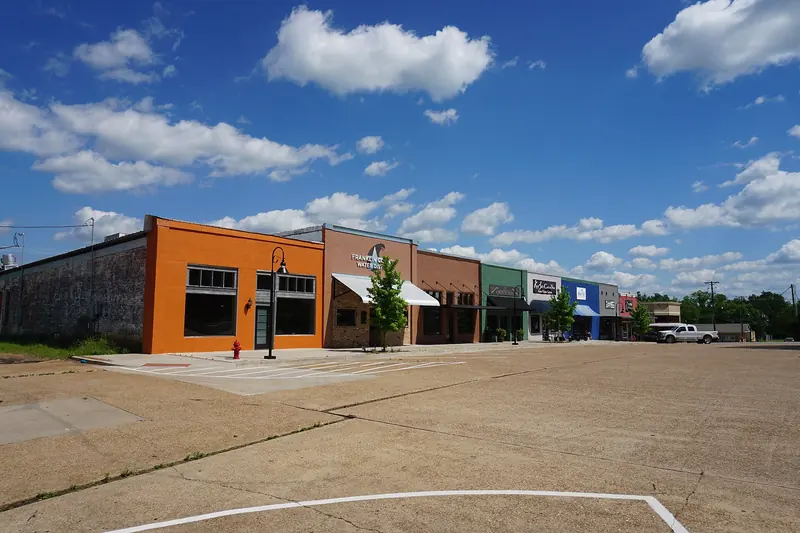
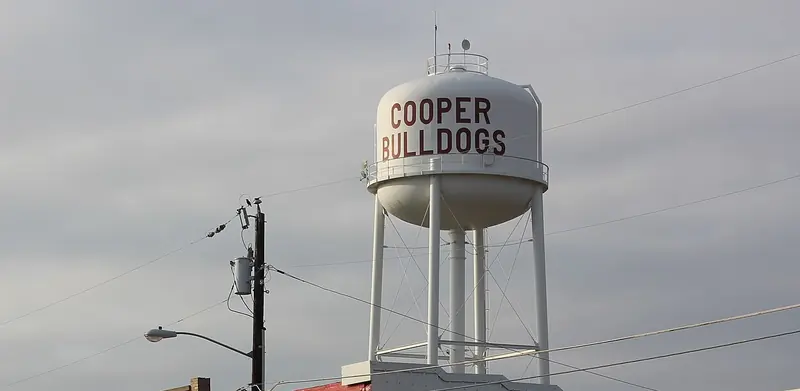
Figure 2-1 and Figure 2-2 show how little the street tells you. Signs and towers name a place. They do not tell you which system's line runs past a given gate.
2-2 Who is listed where you are
The Texas Water Development Board publishes a summary for each county, listing systems "located in the county." For Lamar it names City of Blossom, Bois D Arc MUD, Lamar County Water Supply District, City of Paris, City of Reno, City of Deport, City of Roxton, M J C WSC, Pattonville WSC and Petty WSC.3 Fannin's list is the longest of the nine, at 28 names, and Fannin plans with Region C rather than Region D.4 Appendix A sets out all nine counties.
Those lists are for orientation. The Board says they cover municipal user groups and county-other systems, so very small or non-community systems may be absent. A system can also appear in more than one county. Cypress Springs SUD turns up in Hopkins, Franklin and Titus, and North Hunt SUD in Fannin and Delta.4
2-3 Where the water comes from
Knowing the seller still leaves the source. Paris draws on two reservoirs: the Board's table lists "Crook Lake/Reservoir; Pat Mayse Lake/Reservoir."3 The city's site could not be reached when checked, and a listing of its report, not confirmed, says it "provides surface water from Lake Pat Mayse and Lake Crook, located in Lamar County."5
Lamar County Water Supply District names the same lakes.6 410 WSC in Red River County buys from the District, and its report names Pat Mayse.7 Red River County WSC's 2024 report describes "surface water and ground water from the Blossom Sand and Nacatoch Aquifers in Red River County."8 North Hopkins WSC's water comes from Cooper Lake by way of Sulphur Springs.9 One seller may buy from another, and a report may change from one year to the next. Ask for the current one, which Chapter 4 teaches you to read.
2-4 What a certificate means, and what it leaves open
A utility or WSC "may not in any way render retail water or sewer utility service directly or indirectly to the public without first having obtained from the utility commission a certificate."1 That certificate carries the duty to serve described in Chapter 1. Boundaries may be drawn by polygon or along lines. One county's description of the state layer, not confirmed, speaks of line-based areas with a buffer of usually 200 feet, so a line on a map can matter.10
Large landowners have a narrow exit. An owner of at least 25 acres in a proposed service area may elect to be left out by written notice "before the 30th day after the date the landowner receives notice." That subsection, 13.246(h), begins "Except as provided by Subsection (i)," so read that exception too. A separate streamlined release turns on county population, and this book has not checked any county against those figures. If you own that much land and want out, ask the Public Utility Commission whether your county qualifies.1
Every retail supplier also has to keep a drought plan. TCEQ says "All retail public water suppliers, wholesale water suppliers, and irrigation districts are required to have a DCP," meant to limit "non-essential uses, such as outdoor watering."11 No page checked names WSCs outright, though a WSC selling at retail appears to fit. Ask yours for its stages before you count on outdoor watering from the line in a dry year. For comfort on Lamar County, the Board reports that between January 2016 and November 2023 no public system there reported about 180 days or less of supply remaining.3
Who decides this
- Which system serves this address?
- The system named on your bill, or the state's boundary viewers if there is no bill yet
- Is my land inside a certified area?
- The Public Utility Commission, which holds the certificates
- Where does my water come from?
- Your system's latest annual water report
- What are the drought stages here?
- Your own water system, which keeps the plan
- Can my acreage be released from a service area?
- The Public Utility Commission
On your own place
- Copy the exact name of the system from a water bill, yours or the seller's.
- Open the state's service boundary viewer and see whether your tract lies inside, outside, or across a line.
- Look up your county in Appendix A and note any neighboring systems.
- Ask your system for its latest annual report and write down each source it names.
- Ask for the drought contingency plan and read which uses get cut first.
Notes
- Texas Water Code ch. 13, sections 13.002(24), 13.004(b), 13.242(a), 13.246(h) and 13.2541(b). tcss.legis.texas.gov (read November 4, 2026) ↩
- Texas Water Code ch. 65, sections 65.011, 65.012, 65.205 and 65.206. tcss.legis.texas.gov (read November 4, 2026) ↩
- Texas Water Development Board, Lamar County summary, January 2024. twdb.texas.gov (read November 4, 2026) ↩
- Texas Water Development Board, Fannin County summary, January 2024; the same series covers the other counties. twdb.texas.gov (read November 4, 2026) ↩
- City of Paris, 2023 Drinking Water Quality Report. Search listing only; the city's site could not be reached. paristexas.gov (read November 4, 2026) ↩
- Lamar County Water Supply District, Consumer Confidence Report 2023, machine-read scan. lamarcountywatersupply.myruralwater.com (read November 4, 2026) ↩
- 410 WSC, 2025 Consumer Confidence Report. clients.ruralwaterimpact.com (read November 4, 2026) ↩
- Red River County WSC, 2024 Consumer Confidence Report, machine-read scan. redrivercountywsc.myruralwater.com (read November 4, 2026) ↩
- North Hopkins WSC, 2025 Consumer Confidence Report. northhopkinswsc.myruralwater.com (read November 4, 2026) ↩
- Public Utility Commission of Texas, water guidance page. Search listing only, and the buffer figure comes from one county GIS description of the state layer, also a search listing. puc.texas.gov (read November 4, 2026) ↩
- TCEQ, What Is a Drought Contingency Plan, GI-630. tceq.texas.gov (read November 4, 2026) ↩