Stretch IV. In and under the house
Pipes under a slab floor on clay
What should a slab house owner know about pipes under the floor?
Chapter 18 of 34. Sources checked .
Pipes under a slab sit in soil you are unable to see and, across much of this region, soil that moves. Learn which lines run under your floor, watch the meter and the floor for signs, and leave any cutting, tunneling or rerouting to a licensed plumber.
18-1 The ground under the floor
Chapter 14 looked at what clay does to a buried line out in the yard. This chapter comes in under the house, where the same soil sits beneath a concrete floor and the pipes in it are out of sight.
Chapter 14 has the table of soil units, and the short version is that the 1979 survey of Lamar and Delta counties says of its largest unit: "The soils shrink and swell greatly with changes in moisture content. They also are corrosive and have low strength."1
That survey covers those two counties only. For a place in Fannin, Hopkins, Bowie or the others, no county survey is covered here, so look up your lot on USDA's Web Soil Survey.
18-2 How much it moves, and what nobody has proved
USDA's description of Houston Black gives numbers. Dry cracks run "1.25 to 10 cm (0.5 to 4 in) wide" and stay open "for 90 to 150 cumulative days in most years."3 The Texas Department of Licensing and Regulation, writing for builders of industrialized housing, calls expansive soils "a very common cause of foundation problems." High moisture "will heave (swell), causing a building to be lifted."4
Here the settled part stops. No statement was found from TWDB, TCEQ or AgriLife that ties soil movement to pipes breaking under a slab. It is a fair inference that a rigid pipe held in moving ground takes strain, and plumbers commonly say so. That is ordinary observation, so treat it as a reason to watch, not as a diagnosis.
The same goes for watering around a foundation. You will hear that advice locally. Nothing on it was found from AgriLife or the Forest Service. Before you adopt it as a rule, ask a structural engineer who works on your soil.
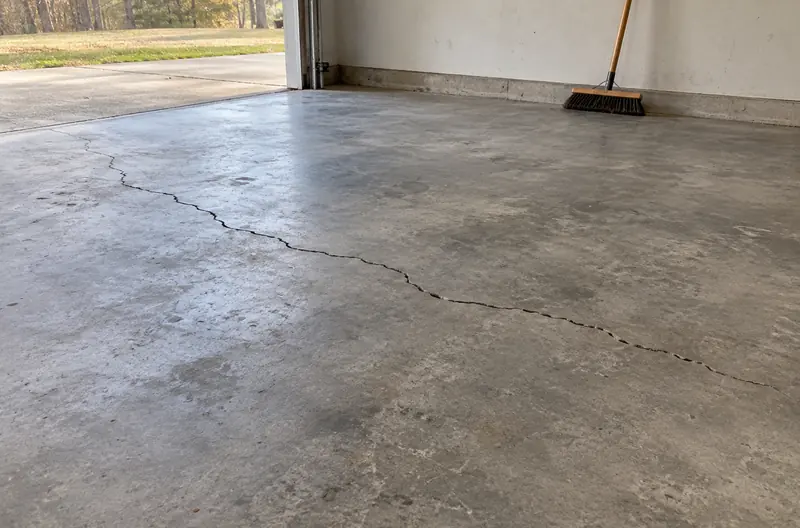
Figure 18-1 shows the kind of thing owners worry about first. A hairline crack in concrete tells you the concrete cracked. It does not tell you a pipe under it has failed, and a sound-looking floor does not clear the pipes either.
18-3 Which lines are under there
Two different systems may run below the floor. Supply lines carry water under pressure from the point where the long line reaches the house. Drain lines carry waste by slope, out toward the sewer or the septic tank. A supply leak runs all day whether anyone uses water or not. A drain leak happens only when water goes down it, and it may show nothing at the meter.
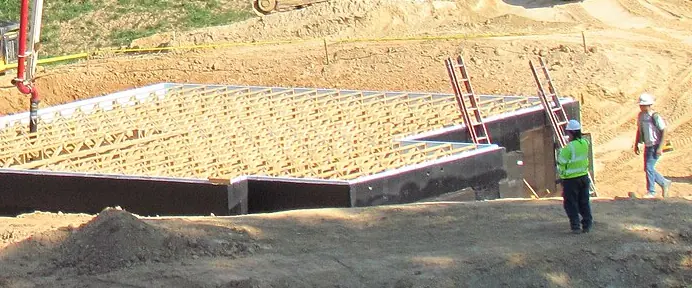
You may have no drawing of any of this. A builder's plan or an old permit file may help, and Figure 18-2 shows why it matters: once concrete goes down, the record is all you have of what lies below it.
18-4 Signs worth a call
The first check is the meter test in Chapter 15. With everything in the house shut off, a moving meter means water is going somewhere, and that chapter shows how to narrow down where. On a well there is no meter to read; a pump that cycles with every fixture off is the same clue.
Beyond the meter, the usual signs are these: a warm patch on a floor, the sound of water with every fixture off, flooring that goes damp with no spill to explain it. These clues are ordinary practice. Any of them can have another cause.
Looking is your part of the job. Do not open the floor, tunnel under the footing or dig along the foundation to find out. If water is near your electrical panel, keep clear and call the electric provider or a licensed electrician. If digging outside is ever part of the plan, call 811 first every time, and remember from Chapter 13 that your own line will not be marked.
18-5 Who may do the work
The law starts with this: "A person, other than a responsible master plumber, may not engage in plumbing unless" the person holds the proper license and works under supervision of a licensee.5 Chapter 31 quotes the homestead exemption. It does not reach a rental or a second house by its words, and it does not make cutting a slab a sensible weekend job.
You will also hear that country property needs no license. The statute's words are narrower than that. Its exemption covers plumbing "other than plumbing performed in conjunction with new construction, repair, or remodeling," on certain properties.5 A slab leak repair is a repair. Chapter 31 quotes the whole section and says what remains unsettled. Ask the Texas State Board of Plumbing Examiners about your own place before relying on any of it.
A plumber has more than one answer to a line under a floor. One is to repair it in place. Another is to abandon it and run new supply lines through walls or an attic. That second job often uses potable PEX pipe (Plumbing Supply and More, run by the same team as this book), and one place that sells it is linked here so you can see what the word means. No agency ranks the choices. Ask about freezing if the attic is proposed, because AgriLife names attics among the places pipes are exposed.6
Who decides this
- Is a crack a foundation problem?
- A structural engineer you hire
- Who may repair a line under a slab?
- A licensed plumber; read Chapter 31 and ask TSBPE about your own place
- Is a permit needed for the repair?
- The city's building department inside city limits; see Chapter 32
- Is a given plumber actually licensed?
- TSBPE's license search; see Chapter 34
- What soil is under the lot?
- USDA's Web Soil Survey
On your own place
- Show everyone in the house where the main shutoff is.
- Run the meter test from Chapter 15 on a day when nothing is using water, and write the reading down.
- Walk the floors barefoot on a cold morning and note any patch that stays warm.
- Look over garage and exposed slab edges, photograph any crack with a ruler in frame, and date it.
- Hunt for the builder's plan, old permits or plumber's invoices that show where lines run.
- Look at where the water enters the slab and where the drain leaves it, from above ground only.
Notes
- USDA Soil Conservation Service, Soil Survey of Lamar and Delta Counties, Texas, 1979, general soil map units, machine-read Internet Archive scan, not the agency's site. archive.org (read November 4, 2026) ↩
- Texas A&M AgriLife, Know Your Texas Soils, on Vertisols. forages.tamu.edu (read November 4, 2026) ↩
- USDA, Official Series Description, Houston Black. soilseries.sc.egov.usda.gov (read November 4, 2026) ↩
- Texas Department of Licensing and Regulation, Industrialized Housing and Buildings Technical Bulletin 10-01. tdlr.texas.gov (read November 4, 2026) ↩
- Texas Occupations Code ch. 1301, sections 1301.351(a), 1301.051, 1301.052, 1301.551. tcss.legis.texas.gov (read November 4, 2026) ↩
- Texas A&M AgriLife, Winter Storms: Frozen Pipes. texashelp.tamu.edu (read November 4, 2026) ↩