Stretch IV. In and under the house
Your water heater, its water and its line
How do hard water and long lines affect a water heater?
Chapter 21 of 34. Sources checked .
Hard water can leave scale and sediment in the tank. A softener may use up the anode faster. A long line with a check valve or pressure-reducing valve can trap expanding hot water, which works the relief valve. Your own manual sets the upkeep; burners, wiring and gas go to licensed people.
21-1 First find out if this applies
Chapter 20 asked for a number. If yours is low, much of what people say about scale in water heaters does not apply to your house, and a well test or supply report saves you from a job or a purchase you do not need.
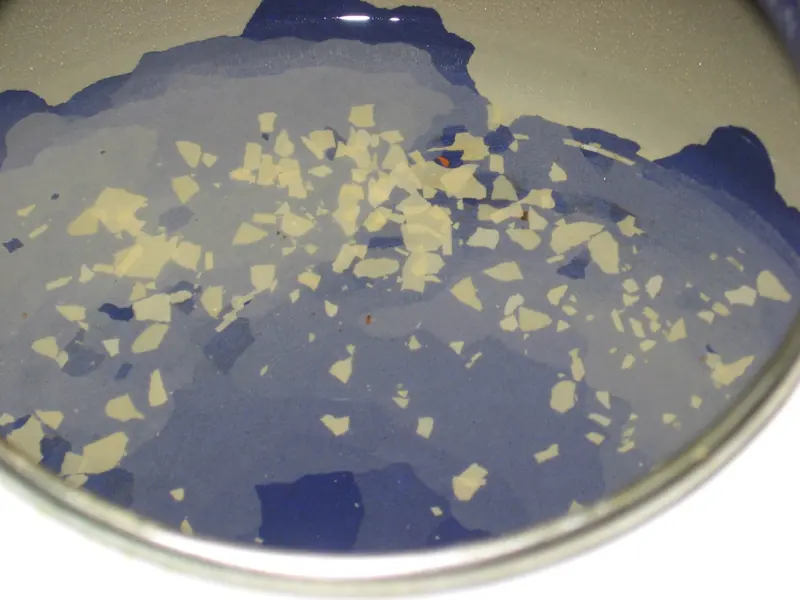
If your number is high, AgriLife says hard water "creates scale in boilers, water heaters and pipes."1 Figure 21-1 shows what scale looks like loose: pale flakes from a cooking pot, the kind of material that may also settle at the bottom of a tank.
21-2 What the makers say about scale and sediment
Makers do not all say the same thing. This book uses two manuals for electric residential models, and yours may differ, so yours comes first.
One manual says: "A water heater's tank can act as a setting basin for solids suspended in the water. It is therefore not uncommon for hard water deposits to accumulate in the bottom of the tank." It suggests that "a few quarts of water be drained from the water heater's tank every month."2 The other lists "Monthly, drain off a gallon of water from the water heater to remove silt and sediment" within the maintenance it says should be done by a qualified service technician.3 So read your own manual to see whether that job is yours. The same manual warns of the drain water: "THIS WATER MAY BE HOT."3
| Item | What the manual says | Who |
|---|---|---|
| Sediment | "a few quarts" monthly in one; "a gallon" monthly in the other | Check your manual; one assigns it to a technician |
| Relief valve | "operated regularly to remove lime deposits and to verify that it is not blocked" | Per your manual; hot water releases under pressure |
| Anode rod | "inspected periodically (every 2 years)," more often with softened water | The installing plumber or the maker |
| Thermostats, element seals | Thermostats "Annually"; element seals "Bi-annually" | Qualified service technician |
| Whole unit | Inspect "at a minimum of annually" | Qualified service technician |
If only the hot taps smell of rotten eggs, AgriLife says, "the source is likely the water heater," since a magnesium anode can react with sulfate in the water.1 That is a clue for your plumber and the lab, not a reason to pull parts out. A rotten-egg smell in the air, away from a tap, is a different matter: treat it as gas. Leave the building first. No switches, phones or flames inside. Call 911 and your gas utility or propane supplier from outside, and do not go back in. Chapter 33 has the full steps.
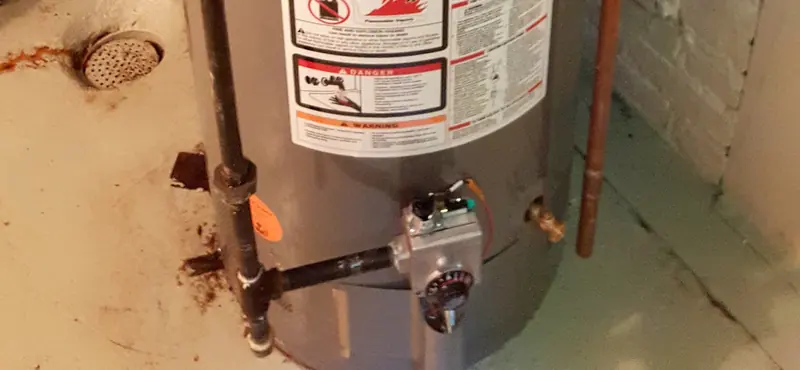
Figure 21-2 shows the lower part of a gas tank heater. It is here so you can recognize the discharge pipe and the drain. This book gives no instructions on the gas valve, burner, flue, elements or wiring.
21-3 How a long line changes things
Here the long line comes indoors. Chapter 16 raised pressure-reducing valves and Chapter 17 raised backflow preventers. Both matter at the heater, because either may hold a check valve.
One maker explains it in full. A check valve "may have been installed in the cold water line as a separate back flow preventer, or it may be part of a pressure reducing valve, water meter or water softener." With one in place you have a "closed water system." Water expands as it heats, and in a closed system that "can create a rapid and dangerous pressure increase in the water heater and system piping," which may make the relief valve open "during each heating cycle." That manual adds that replacing the relief valve "will not correct the problem."2 Its suggested fix is an expansion tank on the cold line, with others available. The other maker tells you to call the water supplier or local plumbing inspector.3
So a relief valve that drips now and then may be telling you something about the line, not the valve. Ask a licensed plumber to look. Do not plug it. The manual says "Do not plug" the outlet "for any reason," and that the discharge opening "must not be subjected to blockage or freezing."3 On a house with a long line and frequent outages, one more point is worth knowing: the same manual says to "Shut off the electric power whenever the water supply to the water heater is off."3 For an electric unit that means the breaker and nothing past it. A gas unit is a question for your licensed plumber or gas supplier, ahead of time.
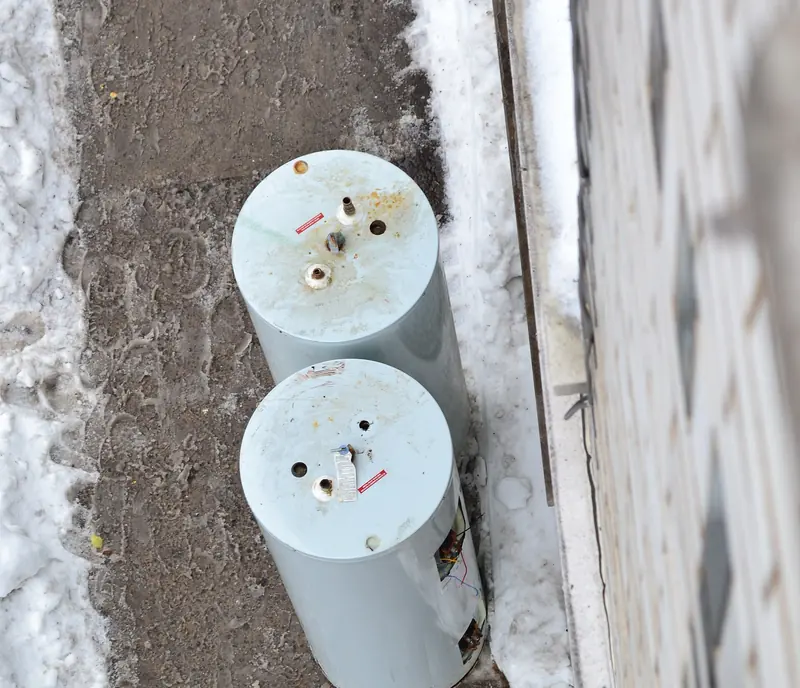
Figure 21-3 shows where old units go in the end. Water heaters wear out, and neither manual here promises how long yours will last.
21-4 Pans, permits and who may replace one
A leaking tank on a pier-and-beam floor or above a finished room can do real damage. One maker's caution reads: "The water heater should not be located in an area where leakage of the tank or connections will result in damage," and where that is unavoidable, "it is recommended that a suitable catch pan, adequately drained, be installed under the water heater." It adds that the pan "MUST conform to local codes."2 Water heater pans (Plumbing Supply and More, run by the same team as this book) are sold at one place linked here, but a pan helps limit damage only if its drain goes somewhere, so the plumber should settle that.
Replacing the unit is plumbing. A dealer's appliance exemption in the statute leaves out "installation and service work on water heaters."4 City permit exceptions cover faucets, ballcocks and a few others, and water heaters are not on that list.4 Chapter 32 deals with permits and Chapter 31 with licenses. The board's rule says the allowance for maintenance staff "does not include cutting into fuel gas plumbing systems and the installation of gas fueled water heaters."5 When in doubt, a licensed plumber is the right call.
Who decides this
- Why does a relief valve drip?
- A licensed plumber, plus your water supplier on any check valve
- Is there a check valve on the line?
- Your water utility, or the plumber who installed the PRV or backflow device
- Who replaces a gas water heater?
- A licensed plumber
- Does the pan meet code?
- Local code; ask the city inspector inside city limits
- A gas smell near the heater
- Leave first, with no switches, phones or flames inside; 911 and the gas utility or propane supplier from outside
On your own place
- Read the maintenance page of your heater's manual; the rating plate gives the model number if you need to look it up.
- Look at the relief discharge pipe: where does it end, and is it open and free of any cap?
- Look under the tank for a pan and see where its drain leads.
- Note any softener, backflow preventer or PRV on the cold line, and ask your plumber about them.
- Check the floor around the tank for rust marks or dampness.
Notes
- Texas Well Owner Network, Description of Water Analysis Parameters, and Well Owner's Guide to Water Supply. twon.tamu.edu and twon.tamu.edu (read November 4, 2026) ↩
- Rheem, electric residential water heater manual AP21980 Rev 02: hard water deposits, catch pan and thermal expansion sections. media.rheem.com (read November 4, 2026) ↩
- Bradford White, installation and operating manual 238-55700-00: relief device, thermal expansion and maintenance sections. docs.bradfordwhite.com (read November 4, 2026) ↩
- Texas Occupations Code ch. 1301, sections 1301.053(a)(4) and 1301.551(c). tcss.legis.texas.gov (read November 4, 2026) ↩
- Texas State Board of Plumbing Examiners, Administrative Rules, March 2026. tsbpe.texas.gov (read November 4, 2026) ↩